Suno AI pumps out roughly 7 million tracks daily, which works out to a full Spotify catalog every two weeks. That number is supposed to sound alarming. And for people who made a living producing background music and stock audio, it genuinely is. A Goldmedia study projects that about 23% of music creators' revenues could be at risk by 2028, with potential losses near €4 billion. That's real money, real livelihoods, and it would be dishonest to wave it away.
But here's what the panic narrative leaves out: almost all of that disruption is concentrated in what the industry calls commodity work. Sync licensing. Background tracks. Functional audio that fills space but was never really the point. Nobody is weeping over an unloved stock music cue.
What Creators Are Actually Using AI For
The Adobe survey of 16,000 creators worldwide found that the top uses of generative AI are editing and enhancement (55%), generating new assets (52%), and brainstorming (48%). In other words, the parts of creative work that feel like homework. The prep, the iteration, the blank-page dread. Not the part where someone has something to say and figures out how to say it.
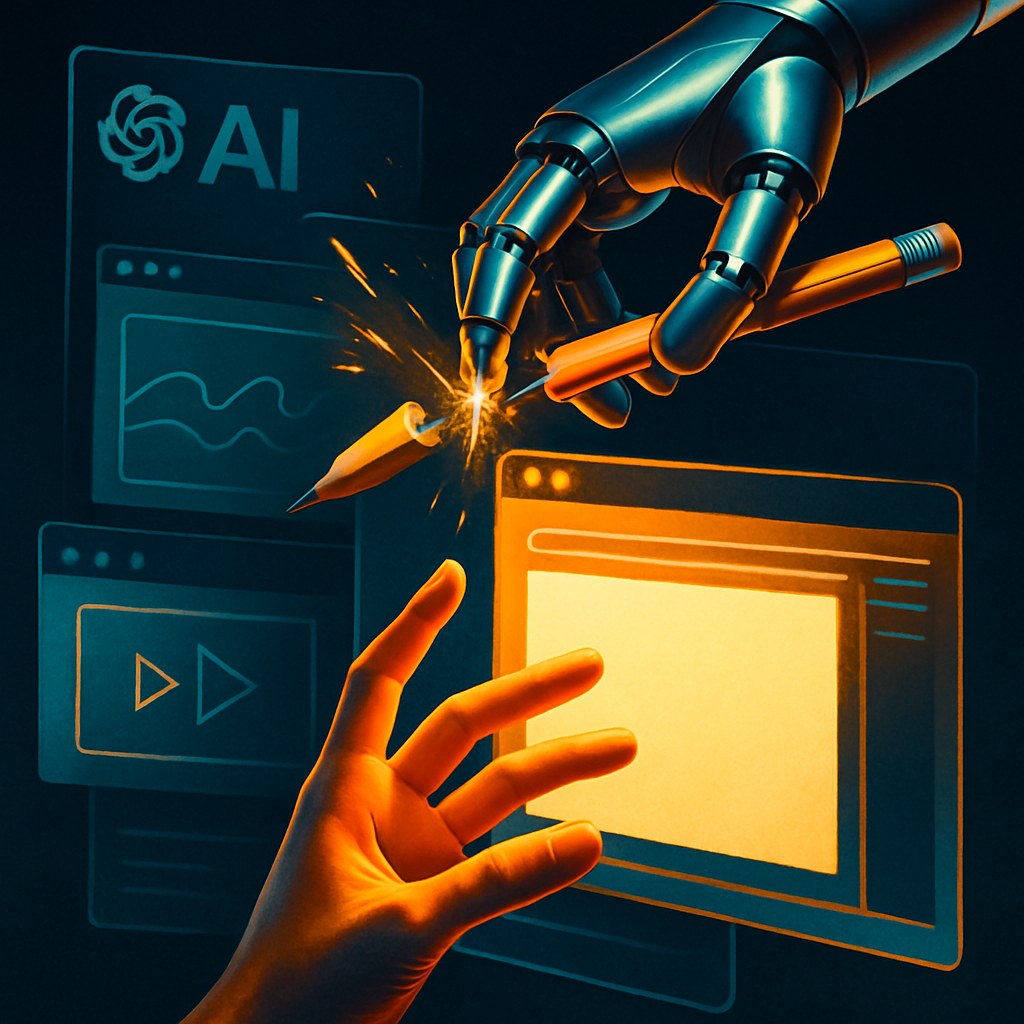
Gallup's data backs this up in a way that should complicate the doom-scrolling. Even composers and art directors, the occupations with the highest AI exposure scores (70% and 50% respectively), were working slightly more hours in 2024 than in 2022, not less. They're using AI to draft ideas and organize workflow. The job didn't shrink. It shifted.
Where the Real Line Is
The honest answer to the question in the headline is: both, but not evenly. AI has genuinely taken over high-volume, low-stakes production. If your creative work was defined by doing something fast and cheaply in volume, that's gone or going. The disruption there is not hypothetical.
But the things that made creative work feel like creative work, the judgment call, the weird instinct, the decision to leave the mistake in because it's actually better, the live performance Gallup notes is barely touched (dancers score a 0.1 on the AI exposure index), the genuine point of view that makes someone's work theirs. Those aren't automated yet, and there's no obvious near-term mechanism by which they will be.
The mistake is treating creativity as a single thing that AI is eating at one end. It's more like a spectrum. The commodity end is already largely consumed. The middle, the skilled craft work, is being rapidly assisted and in some cases destabilized. The far end, the stuff with actual human stakes and human perspective behind it, is so far relatively untouched, not because AI can't approximate it, but because approximation isn't the point.
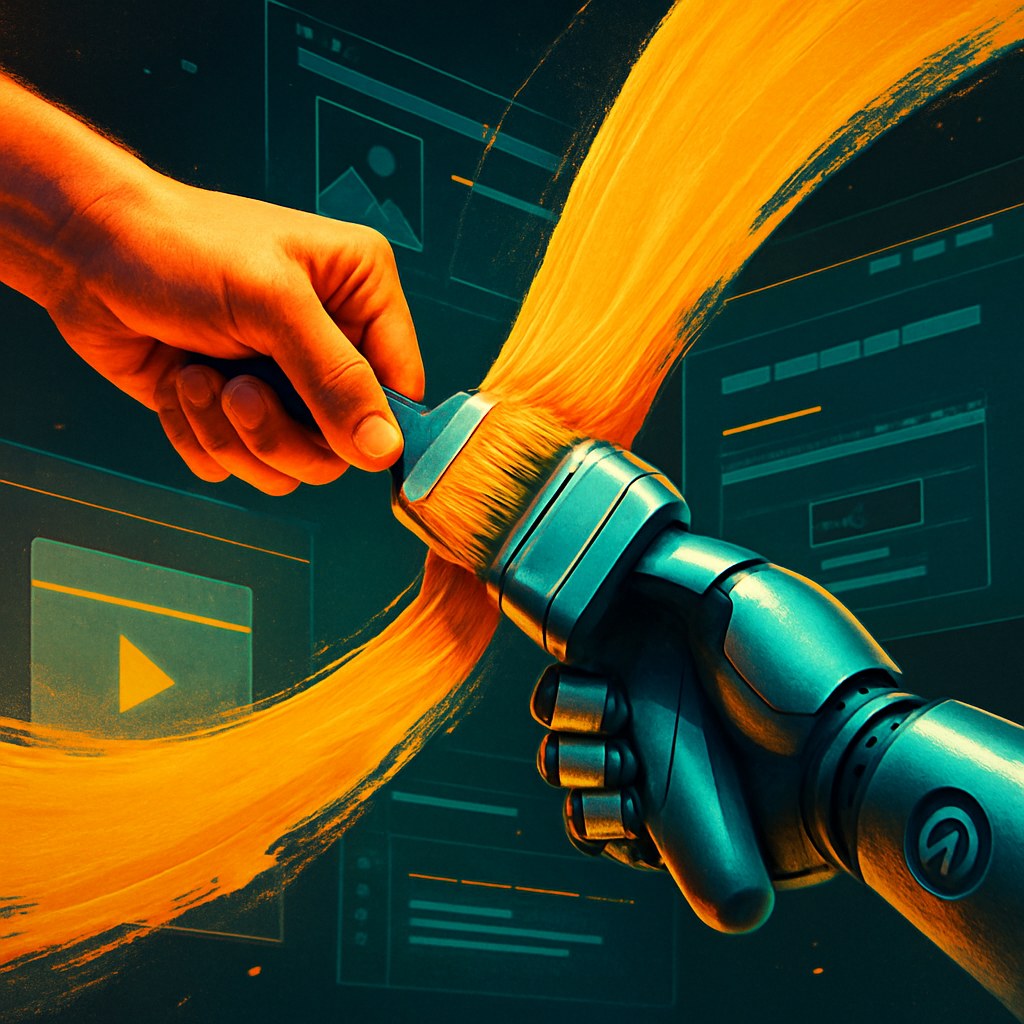
The boring parts are going. Some of the less-boring parts are going too. What remains is the question of whether the creative economy can restructure itself around what's left before the disruption outruns the adaptation. That's the real argument. Not whether the robots are coming, but whether we're building the right thing to replace what they take.