When people picture AI eating creative jobs, they picture it eating the wrong ones. The public conversation fixates on novelists, illustrators, musicians, the romantic archetypes. Meanwhile, a quieter and more measurable displacement is happening one layer down, to the working-class creatives who actually keep the industry running: the 3D artists, the production designers, the graphic designers grinding out deliverables.
An analysis of 180 million job postings found that listings for computer graphic artists, including 3D, VFX, and technical artists, fell 33% in 2025 alone. That's not a gentle decline. That's a cliff. The World Economic Forum's Future of Jobs Report 2025, surveying over 1,000 employers across 55 countries, put graphic designer among the fastest-declining roles. Adobe's own data, sourced from the Bureau of Labor Statistics, shows graphic designer headcount already dropped 7.7% between May 2024 and May 2025.
The Bifurcation Nobody Wants to Talk About
Here's what makes this more than just another displacement story: the roles directly above the ones disappearing are holding steady or growing. The BLS projects art director employment to grow 6% through 2034, faster than the average for all occupations. UI/UX designer appears on the WEF's fastest-growing list. The job market isn't rejecting creative work. It's rejecting the execution layer of creative work while keeping, even expanding, the direction layer.
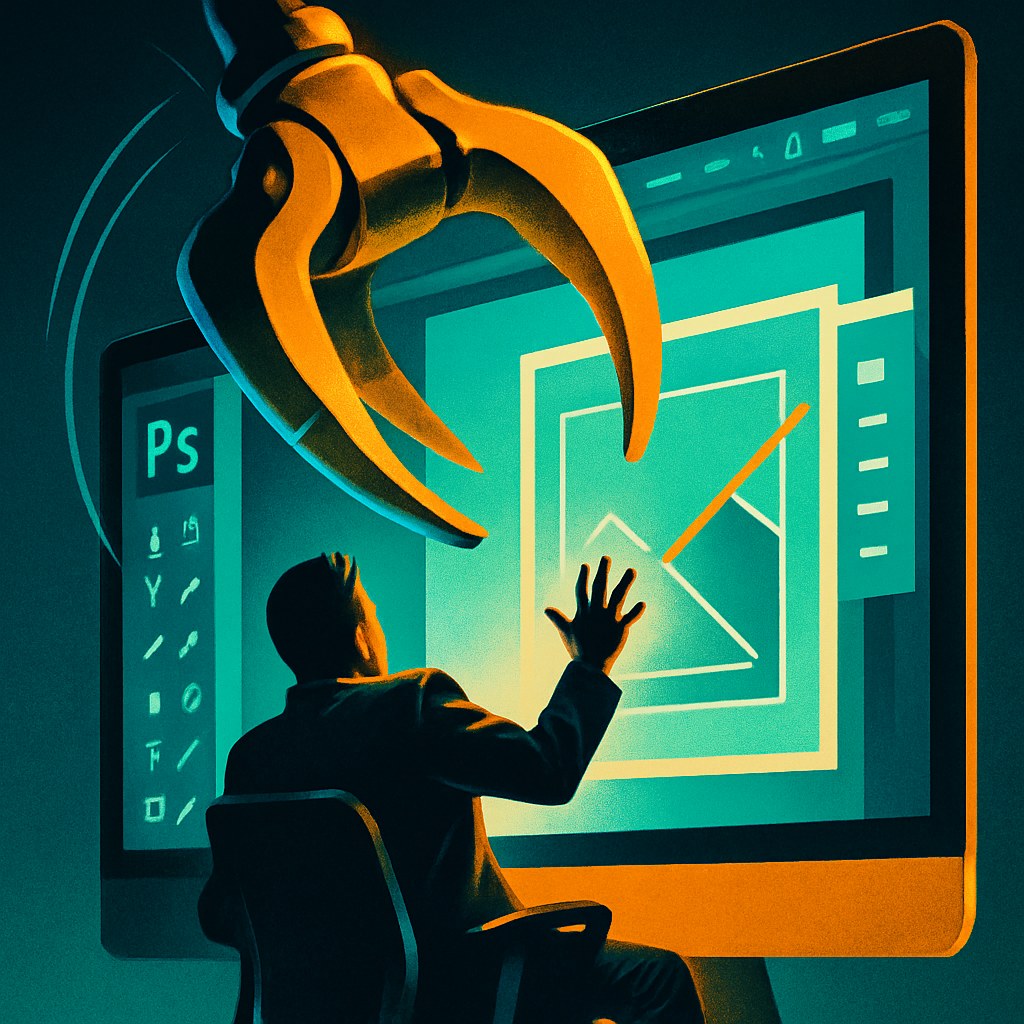
This distinction matters more than it might seem. The traditional path into creative direction ran straight through production. You spent years as a junior designer, a mid-level art director, a senior designer. You built taste and judgment by doing the work. AI is now compressing or eliminating the early rungs of that ladder, which raises an uncomfortable question: where do the art directors of 2035 come from, if the pipeline that produced them is drying up?
Omnicom's acquisition of Interpublic Group, a $13 billion deal finalized in late 2025, offers a case study in how this plays out at scale. The post-merger restructuring cut 4,000 jobs and shuttered three major creative agency networks: DDB, FCB, and MullenLowe. The company explicitly cited AI-driven pressure on production costs as a reshaping force. Those aren't just abstract headcount numbers. Those networks were, among other things, training grounds.
Sympathy for the Art Director Is Not the Point
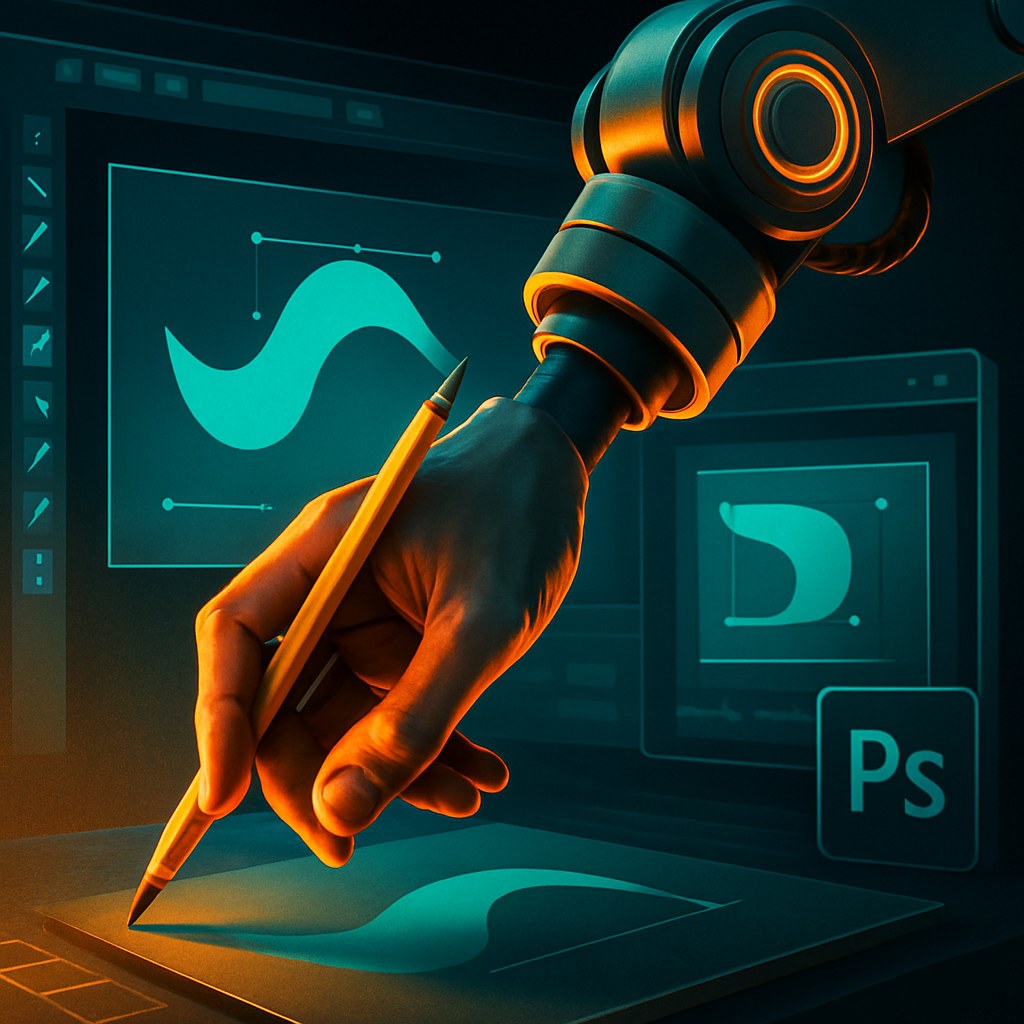
To be clear, this isn't an argument for feeling worse about art directors than about graphic designers. The graphic designers losing work right now are facing immediate financial harm, and they deserve the center of this conversation, not the margins. But the art director angle reveals something the standard displacement narrative misses: AI isn't just automating tasks. It's restructuring who gets to develop creative authority in the first place.
If the execution roles are gone and the direction roles survive, you end up with a creative industry that looks less like a broad profession and more like a narrow elite. A few people who either came up before the transition or had access to the right education sit at the top, directing AI tools they never had to master from the bottom. That's a plausible future. It's also a creatively impoverished one, and we should probably say so while there's still time to do something about it.