Remember the gleeful screenshot habit? Someone would post an AI image of a model or a warrior or a smiling family, and within minutes a reply would zoom in on the hand. Twelve knuckles. A thumb where no thumb belongs. It was satisfying, almost too easy, a party trick that let anyone feel like a forensic expert. Midjourney V7, made default in June 2025, effectively retired the trick. Benchmark testing puts its hand accuracy at around 87% on simple poses, up from roughly 30% in 2023. That's not perfection, but it's well past the point where hands serve as a reliable tell. The obvious giveaway is gone.
Which means we need to get smarter, and the new tells are genuinely harder to spot at a glance. The current leading indicator, according to iCentric's 2025 analysis, is lighting and shadow inconsistency. Not fingers. Shadows. AI images routinely feature light sources that contradict themselves: a face lit from the left, a shadow falling to the left, a reflection that couldn't exist given the geometry of the scene. It's physics, not anatomy, and your eye has to be trained to catch it rather than drawn to it instinctively.
The Tells Have Gone Structural
A July 2026 analysis by Imagera AI points to something they call semantic incoherence: architecture that couldn't stand, machinery with no functional logic, textures that look fine at thumbnail size but dissolve into repetitive gibberish under zoom. This is a different category of flaw than a malformed hand. It's not that the image looks wrong at first glance. It's that it doesn't mean anything when you look closer. A building's windows don't align to any floor plan. A keyboard's keys don't spell anything. The surface is persuasive; the substance isn't there.
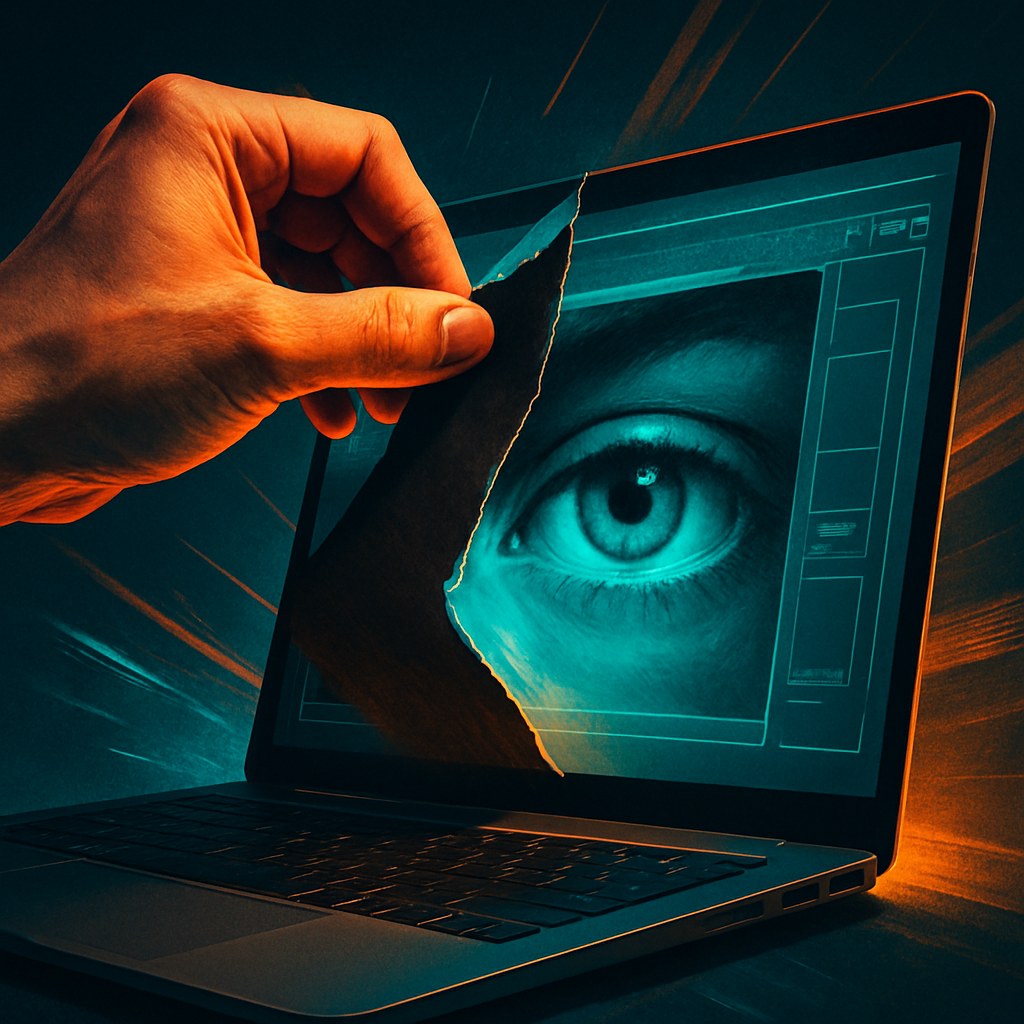
For human eyes, this is genuinely harder. For automated detection, the game has shifted somewhere most people won't follow it. A June 2025 paper out of arXiv documents that state-of-the-art AI image detectors have largely abandoned looking for the spatial artifacts, edge weirdness, color saturation anomalies, that plagued older generators. They now analyze frequency-domain residuals, essentially statistical fingerprints buried in pixel relationships that survive even when the image looks perfectly clean to human observers. That's the arms race happening below the surface while we argue about fingers.
What This Actually Means
The optimistic reading is that AI image quality is genuinely improving, and the critics who staked their skepticism on anatomical failures have to find better arguments. Fair enough. The pessimistic reading is that the tells are migrating from visible to invisible, and the average person's ability to detect synthetic imagery is now falling behind the technology rather than keeping pace with it. Both readings are true at the same time.
The hands critique was always a bit of a crutch. It let people feel confident they could spot AI without having to engage with harder questions about context, sourcing, or intent. Now that the crutch is gone, those harder questions are the only ones left. Is the light in this image physically coherent? Does the background hold up? Does the image, stripped of its immediate surface appeal, actually mean anything? Those are the questions skilled visual editors have always asked. The rest of us are just catching up.