
Here's the worry most songwriters have: if I let AI touch my lyrics, will they still sound like me? It's a fair question. And honestly, a little skepticism is healthy.
But here's what's actually happening in writing rooms right now. Billboard has reported on songwriters using AI tools like Suno when they're stuck, not to hand the song over, but to shake loose an idea. The AI throws out options. The songwriter picks what sparks something and throws the rest away. Your voice stays in the driver's seat.
Why the worry is partly valid (and partly not)
The concern isn't irrational. Ask an AI to "write a verse about heartbreak" and you'll get something competent, structured, and completely forgettable. Generic inputs produce generic outputs. That's the trap.
The good news: that's a prompting problem, not an AI problem. The more specific and personal your prompt, the less generic the result. "Write a verse about heartbreak" is a dead end. "Give me 10 metaphors for the feeling of checking your phone and hoping someone texted" is a starting point you can actually use.
At least a couple of independent reviewers, including H2S Media, note that AI lyric tools struggle specifically with personal, lived-experience detail. That's actually your advantage. The specific details only you know are exactly what make your songs yours. AI can help you build around them, but it can't supply them.
Where AI actually helps: getting unstuck
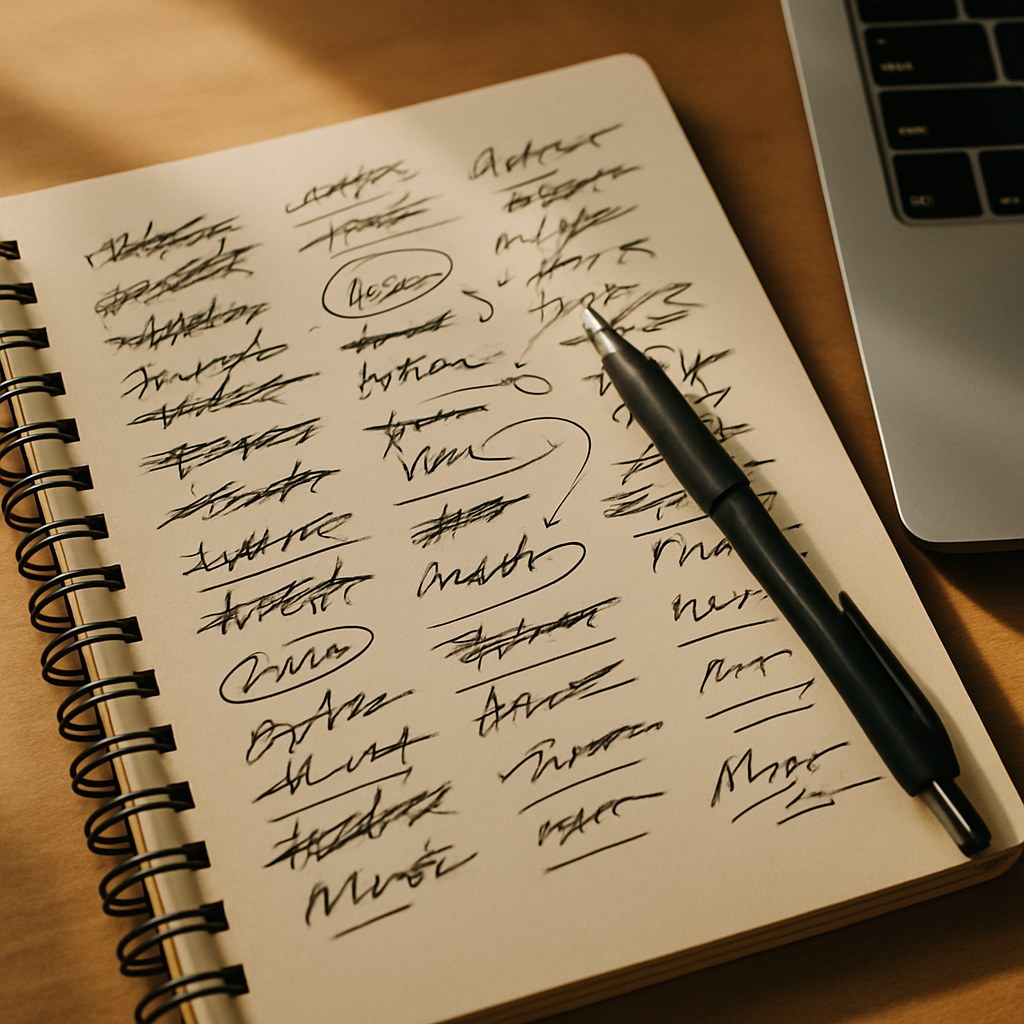
The most useful thing AI does for songwriters is generate volume fast. In a Berklee Online interview, songwriter and music educator Ben Camp describes a workflow that's worth borrowing directly: prompts like "brainstorm 10 titles for a song about defying expectations" or "give me 20 metaphors about struggling to succeed." You're not asking the AI to write your song. You're asking it to throw a pile of raw material at the wall so you can pick what sticks.
For general lyric brainstorming, ChatGPT and Claude both have free tiers that are functional enough to try this today. Some reviewers rate Claude as stronger for emotional nuance and keeping meter consistent across longer drafts, though that assessment comes from a small number of sources rather than broad consensus, so take it as a starting point for your own testing.
If you want something built specifically for songwriting, LyricStudio (lyricstudio.net) is worth a look. It's designed for lyrics rather than full song generation, with a built-in rhyme finder and genre-specific suggestions. The site confirms a free trial exists, though it's limited, so treat it as a quick test rather than an extended free tool.
Using AI to edit without erasing yourself
Getting a first draft down is one thing. The more interesting use is revision.
Try this: paste a line you've written but aren't happy with and ask the AI for five alternative versions that keep the same emotional intent. Or ask it to rewrite your chorus so it scans to a specific syllable count. Or ask for three different rhyme options for a word that's boxing you in.
You're using it like a thesaurus that understands structure. The output gives you angles you hadn't considered. You pick one, rewrite it in your own phrasing, and suddenly the line is yours again but better than it was before.
This is where the craft development angle gets interesting. In the Berklee Online interview, Camp notes that generating lots of variations of a single lyric sharpens their ear for what actually works. You're not just fixing a line, you're training your instincts.

One thing to try right now
Open ChatGPT or Claude (both have free tiers, though you'll need to create an account to get started). Pick a song you're stuck on, or even just a feeling you've been trying to write about.
Type something like: "I'm writing a song about [your specific situation]. Give me 10 different metaphors or images I could use. Make them concrete and specific, not abstract."
Don't use any of the output directly. Read through it and notice what your gut responds to. One image might feel almost right. Rewrite it in your own words. That rewrite is the song.
That's the whole workflow. AI as a prompt, you as the author. Your voice doesn't disappear — if anything, having something to react against can make it sharper.
The fear that AI will make your songs sound like everyone else's only comes true if you let it write them. Use it to generate the mess, then do what only you can do: pick what matters, throw out what doesn't, and rewrite it until it sounds like you said it. That's still songwriting. The tool just helped you get there faster.