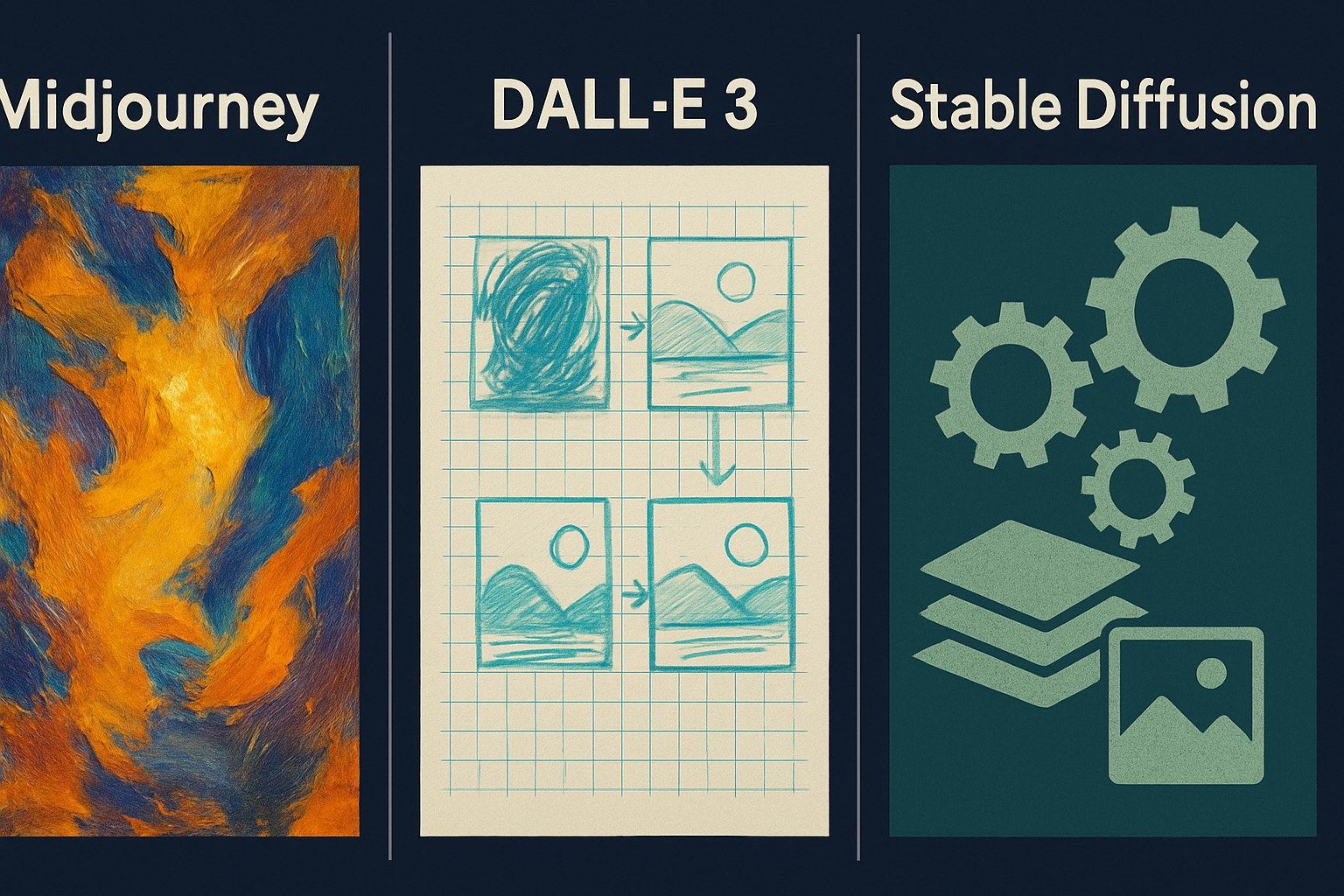
Three tools dominate AI image generation in 2026, and they're aimed at genuinely different use cases. Picking the wrong one usually means decent results that still don't quite fit your workflow. This guide skips the neutral comparison and tells you which one to open first, based on what you're actually trying to make.
What you're making should decide which tool you pick
Most roundups treat these tools as interchangeable with slightly different quality scores. They're not.
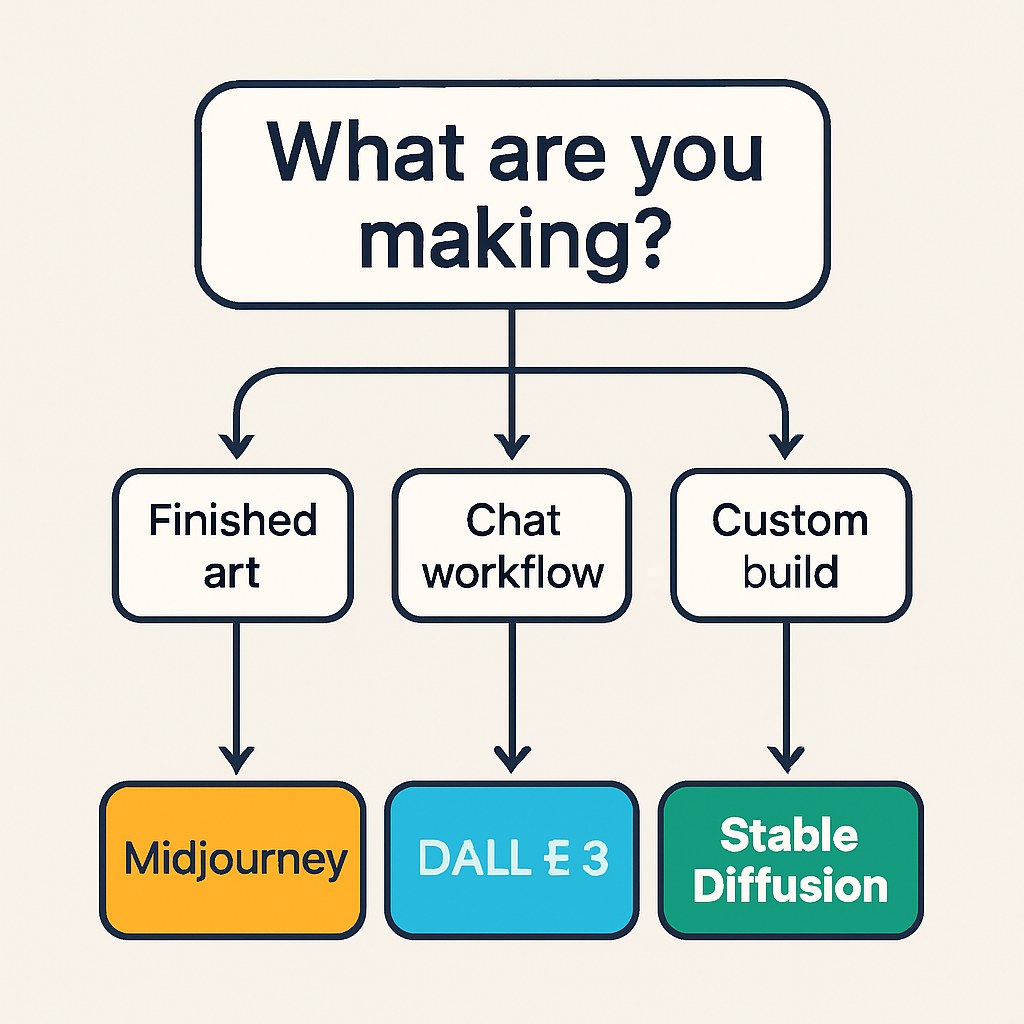
Midjourney is the one to use when the image itself is the finished product — editorial illustration, concept art, visual branding, anything where aesthetic quality is the whole point. Its output has a visual coherence that's still hard to match. The tradeoff: it's paid-only (no free tier on the main platform), and while it now has a proper web app at midjourney.com so you don't need Discord anymore, the prompting system and parameter controls still take time to learn.
Adobe Firefly makes the most sense if you're working inside Adobe's ecosystem — Photoshop, Illustrator, Premiere — or if you want a free way to experiment before committing to anything. Firefly has a free tier with daily generations, and its models are trained on licensed and public domain content, which matters if you're worried about IP risk. It also pulls in third-party models (including Flux, Google Imagen, and OpenAI's generation) inside the same interface, so it's more of a hub than a single model.
OpenAI's image generation via ChatGPT is the lowest-friction option. If you already use ChatGPT, the image tool is already there — it runs natively through GPT-4o as of late 2025. Free-tier accounts get a small daily allowance; paid plans get more. It handles text-in-images better than most, and its conversational interface makes iteration fast. It won't match Midjourney on raw aesthetics, but it's often good enough — and you're already logged in.
The three generators, and what each one actually does well
The capability observations below are drawn from independent reviews published in 2025–2026 and each tool's official documentation, noted in the methodology section at the bottom of this article.
Tools compared:
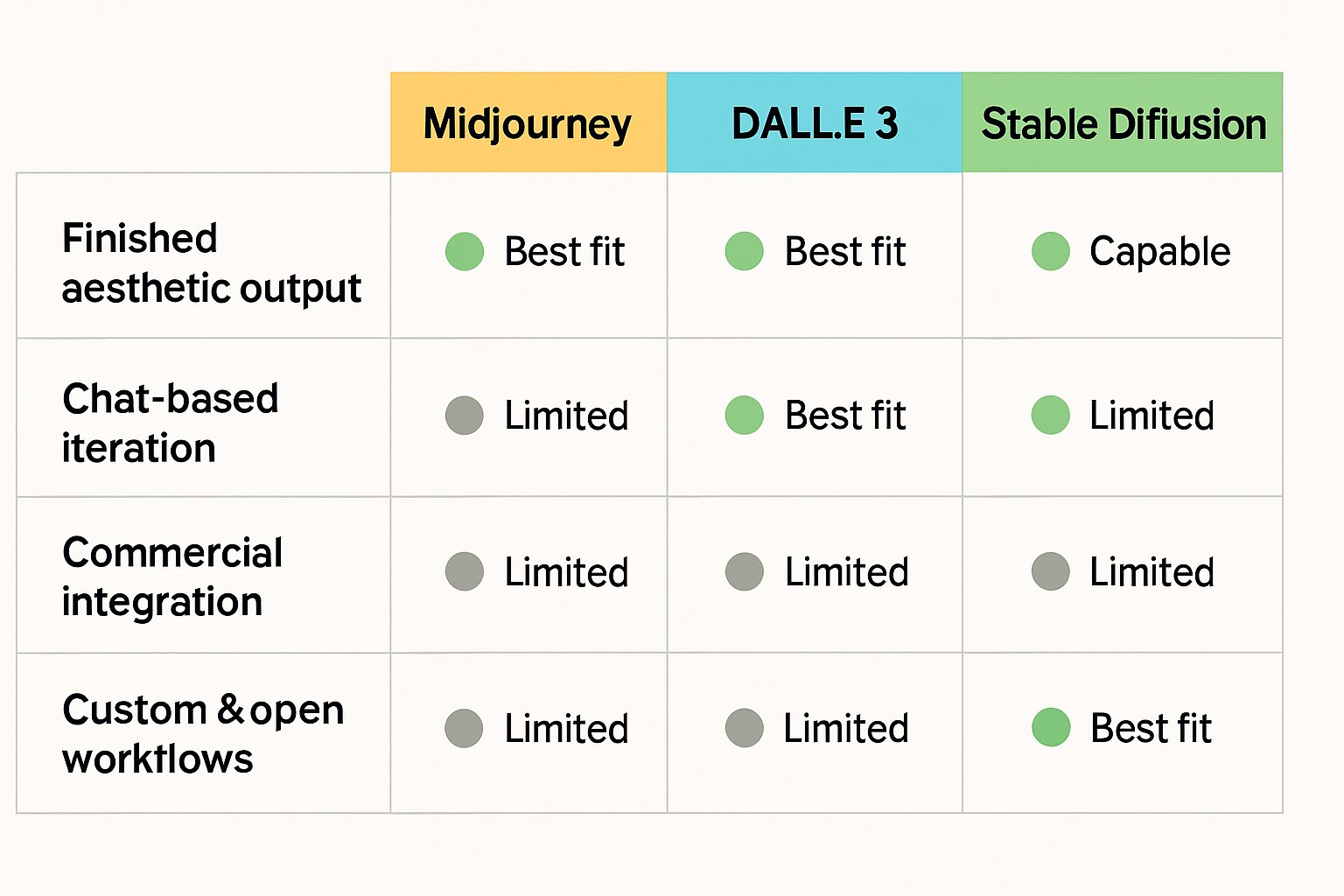
Midjourney — The go-to for high-quality, aesthetically distinctive images. Subscription-only, but now accessible via a full web app — no Discord required. All paid plans include commercial usage rights, with one exception: companies earning over $1M annually need a Pro or Mega plan to use outputs commercially.
Strengths: Consistently strong aesthetic output — editorial, conceptual, and stylized work all land well. Web app at midjourney.com works without Discord, as of late 2024. All paid tiers include commercial usage rights for most creators.
Limitations: No free tier on the main platform — paid subscription required to generate anything. Midjourney's visual style is distinctive, which is a constraint if you need something more neutral or documentary.
---
Adobe Firefly — A free-to-start image generator that lives both as a standalone web and mobile app and inside Creative Cloud. Trained on licensed and public domain content. Also serves as a hub for third-party models including Flux, Google Imagen, and OpenAI's generation.
Strengths: Free daily generations with no credit card required to start. Trained on licensed content — Adobe describes it as commercially safe for production use, though verify current terms at adobe.com before monetizing. Deep integration with Photoshop, Illustrator, and Premiere for existing Adobe users.
Limitations: Adobe's own Firefly model tends toward clean, polished output — not the best fit for raw or gritty aesthetics. Commercial use terms between free and paid tiers aren't fully spelled out in the product page — check Adobe's current terms before using free-tier outputs commercially.
---
OpenAI Image Generation (via ChatGPT) — Built into ChatGPT and running natively through GPT-4o as of late 2025. The easiest entry point if you're already using ChatGPT. According to aitoolradar.io, commercial usage rights apply to paid ChatGPT tiers; free-tier image outputs are not licensed for commercial use. Free-tier users get a limited daily allowance; paid plans offer more.
Strengths: No separate account needed if you use ChatGPT already. Handles text inside images better than most generators. Conversational prompting makes iteration quick — you can refine in plain language.
Limitations: Free-tier outputs are not licensed for commercial use (per aitoolradar.io — confirm against OpenAI's current usage policies before publishing). Aesthetic output is competent but less distinctive than Midjourney — better for functional images than artistic ones.
 Midjourney →
 Adobe Firefly →
 OpenAI Image Generation (via ChatGPT) →
Before you publish or sell anything made with these tools
Commercial rights vary by tool and by plan tier, and the details change often enough that linking to the tool's own terms is more reliable than any summary here.
Midjourney: All paid plans include commercial usage rights for most creators. If your business earns over $1 million annually, you need a Pro or Mega plan specifically. Confirm at midjourney.com/legal.
Adobe Firefly: Adobe describes its own Firefly models as trained on licensed and public domain content, and positions them as commercially safe for production use. However, the distinction between free-tier and paid-tier commercial rights wasn't fully explicit in Adobe's product page at the time this was written. Check Adobe's terms before using free-tier outputs in client work or products for sale.
OpenAI (ChatGPT image generation): According to aitoolradar.io, commercial usage rights apply to paid ChatGPT tiers; free-tier image outputs are not licensed for commercial use. Review OpenAI's usage policies to confirm current terms before publishing or monetizing any outputs.
One more thing worth knowing: Firefly integrates Flux models from Black Forest Labs. The Flux model naming and licensing tiers have shifted over time — the Apache 2.0 licensed variants allow free commercial use, while others carry non-commercial licenses. If a platform tells you it's running Flux, check which variant and what license applies, using the platform's own terms rather than assuming.
Start with whichever tool matches your actual workflow today. If you're already in ChatGPT, generate something there first. If you're in Adobe's ecosystem, Firefly is a natural fit and costs nothing to try. If you've seen Midjourney work you admire and want that quality, it's worth the subscription — just know it's a commitment from day one.